
OpenAI Private Company Status
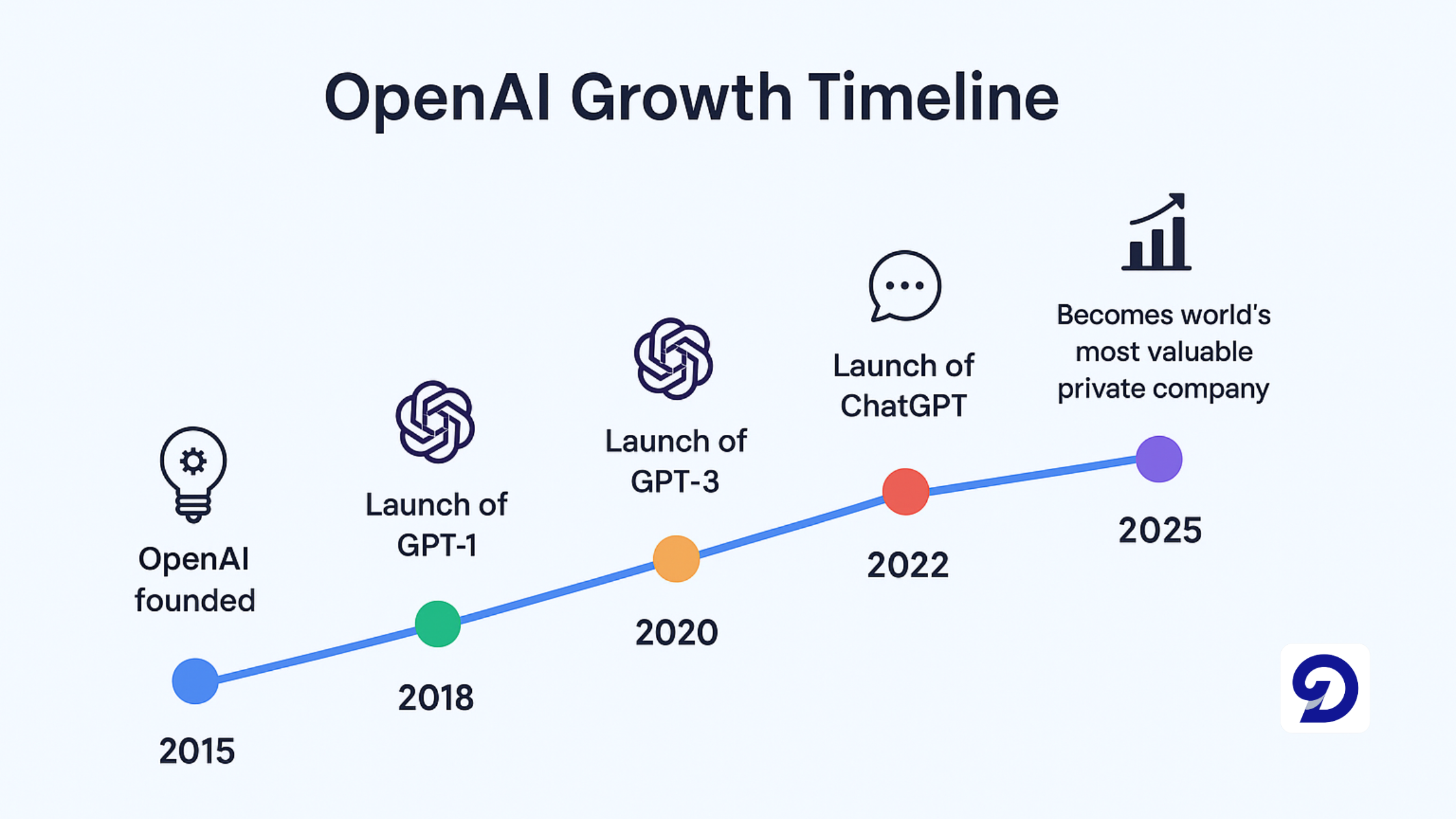
When OpenAI launched in December 2015, it described itself as a nonprofit research organization dedicated to creating artificial general intelligence (AGI) for the benefit of all humanity. Founded by Sam Altman, Elon Musk, Greg Brockman and others, its mission embodied lofty ideals—rather than commercial dominance. At the time, the AI research space was dominated by Google DeepMind and academic institutions.
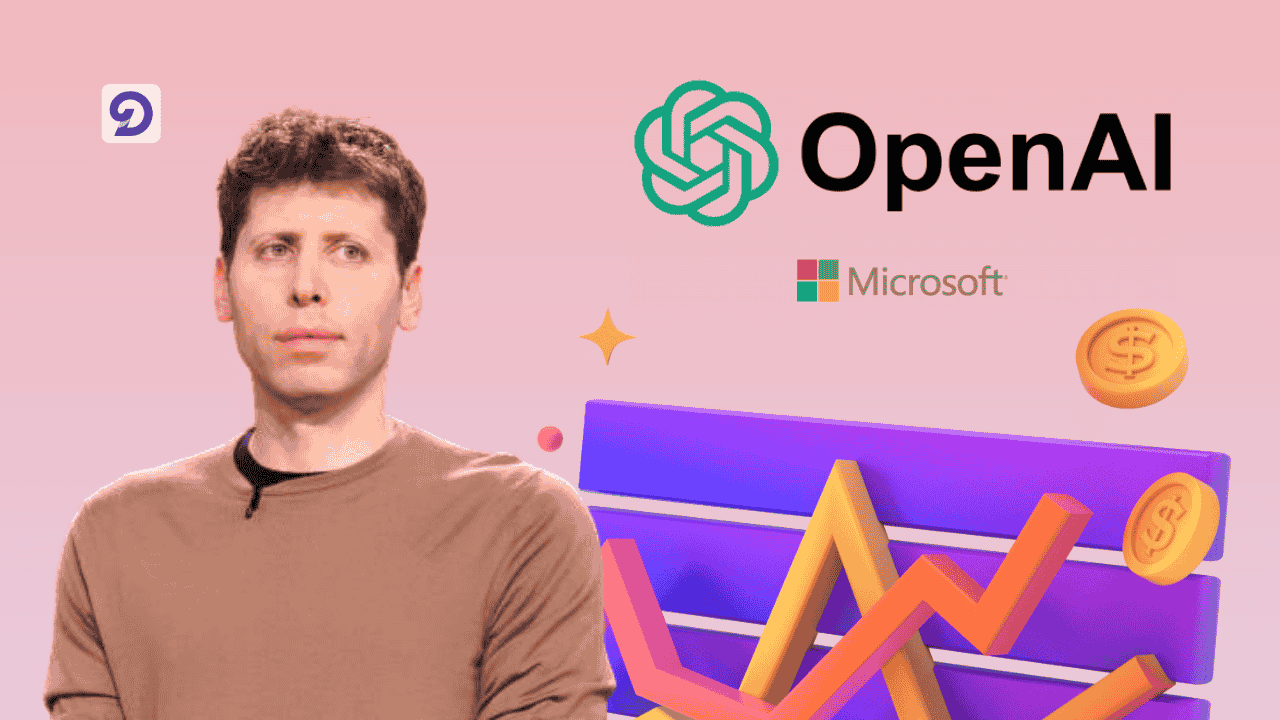
Fast forward a decade, and now valued at around $500 billion, making OpenAI the world’s most valuable private company.
How did this transformation happen? What strategy, key milestones and partnerships enabled the leap? OpenAI’s story isn’t just about technology, it’s about timing, strategic pivots, visionary leadership, and a global shift in how we think about artificial intelligence. In this guide, we’ll explore how OpenAI achieved its meteoric rise, the business and product strategies that fueled its dominance, and what the future holds for both the company and the AI industry at large.
Founding and Early Years
OpenAI was formally founded with a non-profit ethos, based in San Francisco, and with early backing from high-profile technologists. The move was ambitious: democratize AGI, publish research openly, and avoid the “closed, monopoly” lab model.
In its early years, OpenAI kept to modest funding rounds, steady growth in AI capability, and major publications in reinforcement learning and generative models. The pivot began when the organization accepted commercialization, corporate partnerships, and financing that would shift its status and structure. For example, in January 2023 Microsoft announced a $10 billion multi-year investment in OpenAI to power Azure and joint AI-cloud ambitions.
The transition from nonprofit to hybrid model enabled OpenAI to scale computing power, assemble talent and build large language models that caught global attention. It was this shift—purposeful, calculated, and ambitious, that set the stage for what was to follow.
Becoming the World’s Most Valuable Private Company
By 2019, OpenAI restructured from a nonprofit to a “capped-profit” entity called OpenAI LP, allowing it to raise external funding while maintaining a charter aligned with its ethical mission.
Shortly after, Microsoft made a landmark $1 billion investment, granting OpenAI access to Azure’s massive cloud infrastructure. This partnership became the cornerstone of OpenAI’s growth — offering the compute power needed to train GPT-3, one of the largest language models ever built at the time.
In exchange, Microsoft secured exclusive licensing rights to some of OpenAI’s technology and later integrated it into products like Microsoft 365 Copilot, Bing Chat, and Azure AI Services.
This partnership wasn’t just financial — it transformed OpenAI from a research lab into a commercial powerhouse and sitting atop of the list of the largest AI companies in the world.
Valuation Journey: Milestones & Breakthroughs
The valuation story of OpenAI is extraordinary. In April 2023 a secondary sale valued the company around $27 billion–$29 billion.
By October 2024, a $6.6 billion investment round lifted the valuation to approximately $157 billion.
In early 2025, OpenAI raised ~$40 billion in a financing round, achieving a ~$300 billion post-money valuation.
Finally, in October 2025 a secondary share sale (employees selling to investors) of approximately $6.6 billion pushed the valuation to ~$500 billion—surpassing even SpaceX and securing the title of world’s most valuable private company.
While OpenAI started as a mission-driven entity, it has evolved into a revenue-generating AI juggernaut., its primary revenue streams now include:
- ChatGPT Plus and Team subscriptions
- Enterprise AI licensing via Microsoft Azure
- API usage for developers and businesses
- Custom GPTs and model fine-tuning services
Such rapid value escalation reflects not only product success and adoption, but also investor anticipation about AI’s future. Revenue figures supported the trajectory: OpenAI generated around $4.3 billion in the first half of 2025—already ahead of some full-year numbers.
FURTHER READING
➤ How Netflix Saves $1 Billion a Year with AI
The Breakthrough: GPT-3 and the Birth of ChatGPT
The release of GPT-3 in June 2020 was a turning point. Trained on 175 billion parameters, it set a new benchmark for natural language understanding and generation. Developers could now use the OpenAI API to integrate human-like text generation into their applications.
But it was ChatGPT, launched in November 2022, that changed everything. Within five days, it amassed over one million users — faster than any platform in history at the time.
ChatGPT’s simplicity, accessibility, and near-human conversational quality captured the world’s attention. From students and coders to marketers and CEOs, everyone wanted to experiment with it.
The viral success of ChatGPT marked the beginning of the consumer AI era and positioned OpenAI as the central figure in it.
GPT-4, GPT-4 Turbo, and the Leap Toward AGI
With the release of GPT-4 in March 2023, OpenAI reaffirmed its dominance. GPT-4 was significantly more capable than its predecessor — excelling in reasoning, coding, translation, and creativity.
It powered everything from Duolingo’s AI tutor to Stripe’s customer service bots. Then came GPT-4 Turbo in late 2024, offering faster, cheaper, and longer-context responses, ideal for enterprises and developers.
What truly set OpenAI apart was its focus on scalability. Every model release wasn’t just an upgrade; it was a platform shift that allowed developers and companies to build smarter tools on top of it.
The Business Engine Behind the Boom
Behind the viral magic of ChatGPT was a smart, scalable business model. OpenAI introduced ChatGPT Plus in early 2023, offering faster responses and access to premium models (like GPT-4) for $20/month.
That subscription model alone generated hundreds of millions of dollars in recurring revenue. Combined with API usage from developers and enterprise integrations with Microsoft, OpenAI’s annual revenue reportedly surpassed $3 billion by mid-2025.
Unlike most startups, OpenAI’s business scaled effortlessly — the more people used it, the better its models became. Every query improved the training loop, refining accuracy, reasoning, and personalization.
Leadership and Vision: Sam Altman’s Role
At the heart of OpenAI’s success is Sam Altman, the company’s CEO. Known for his strategic foresight and risk appetite, Altman envisioned AI not as a niche tool but as a general-purpose intelligence layer for the digital economy.
Under his leadership, OpenAI pursued a balanced dual mission: accelerate AI development while ensuring safety and alignment.
Altman’s approach to funding was equally visionary — forging deep partnerships with the likes of Microsoft, securing multi-billion-dollar investments, and spearheading OpenAI’s hardware ambitions, such as plans to develop its own AI chips to reduce dependence on Nvidia.
Even through internal turbulence — including Altman’s brief ousting in 2023 and reinstatement after employee revolt — OpenAI emerged stronger, with clearer governance and greater global attention.
Competition, Ethical Tensions and Global Impact
OpenAI’s rise cannot be viewed in isolation. The company has had to navigate an increasingly competitive landscape featuring Anthropic, Google DeepMind, xAI, and Mistral AI.
Yet, OpenAI continues to lead in public trust, usability, and developer ecosystem. Its ChatGPT platform, with custom GPTs and plugin integrations, transformed how individuals and businesses interact with AI tools.
More importantly, its influence extends beyond software. OpenAI’s models now power educational tools, medical research assistants, financial automation, and creative industries — effectively becoming the infrastructure of modern AI applications.
OpenAI’s journey hasn’t been without controversy. Critics have questioned its closed-source stance, concerns about AI-generated misinformation, and potential job displacement due to automation.
However, OpenAI has been proactive in promoting AI safety through initiatives like the AI Safety Board, alignment research, and global dialogues on responsible AI development.
It also continues to collaborate with regulators and organizations to set ethical frameworks — balancing innovation with social responsibility.
As Sam Altman famously stated:
“The question isn’t whether AGI will change the world — it’s how we ensure it changes it for good.”
The Road Ahead: From AI Models to AGI
Looking ahead, OpenAI’s focus is on multi-modal intelligence models that seamlessly understand and generate text, images, audio, and video. Its upcoming models are expected to handle autonomous decision-making, enabling next-generation tools for coding, healthcare, and business automation.
Moreover, OpenAI is exploring the creation of personalized AI agents, capable of assisting users across every digital task — from managing schedules to writing code or summarizing news. The company’s roadmap suggests an eventual leap toward artificial general intelligence – AGI, a system that can learn and reason like humans.
Whether or not OpenAI achieves AGI first, its legacy as the company that mainstreamed AI, and redefined how the world interacts with intelligence — is already sealed.
At Doshby, we see OpenAI’s story on becoming the world’s most valuable private company as a roadmap proof that when technology, strategy, and purpose align, innovation can redefine entire industries.
If your business is exploring how to integrate AI to automate workflows, personalize customer experiences, or reduce costs, Doshby can help design and deploy AI-powered systems tailored to your goals