
The Power Behind Every “You Might Also Like”
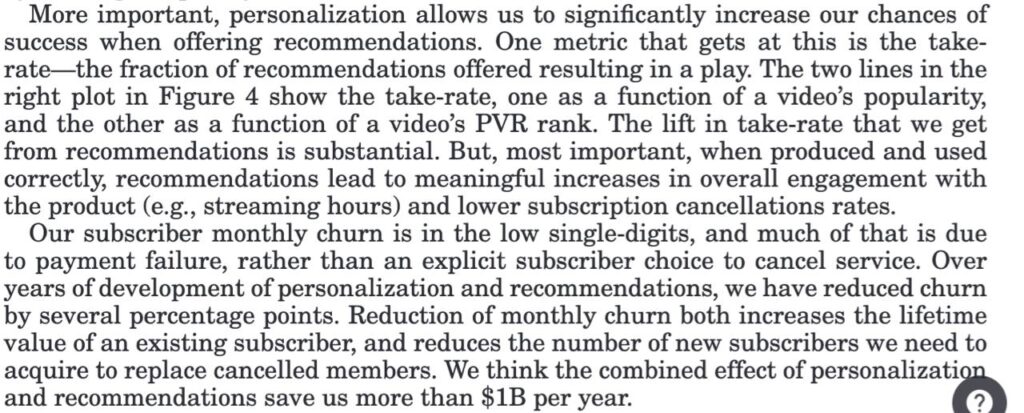
When you open Netflix and instantly find something you love, that’s not luck or guesswork, it’s AI at work. Behind every personalized recommendation, thumbnail image, and even the sequence of shows you see, lies a finely tuned machine-learning ecosystem that saves Netflix more than $1 billion a year (as claimed by penned by Gomez-Uribe and Netflix’s Chief Product Officer Neil Hunt, in an academic paper)
This number isn’t just about cutting costs — it’s about using AI to understand users better than they understand themselves. Netflix’s approach to AI shows how technology, when integrated smartly into business processes, can become a profit multiplier rather than just an operational tool.
At Doshby, we study and implement similar AI systems that help enterprises make smarter data-driven decisions like building AI call agents. But Netflix’s story remains the gold standard in showing just how powerful AI can be when strategically embedded into every layer of an organization. Let us deep-dive at some of the ways Netflix is able to achieve this.
AI-Powered Personalization: The Billion-Dollar Recommendation Engine
Let’s start with what Netflix is best known for; its recommendation algorithm.
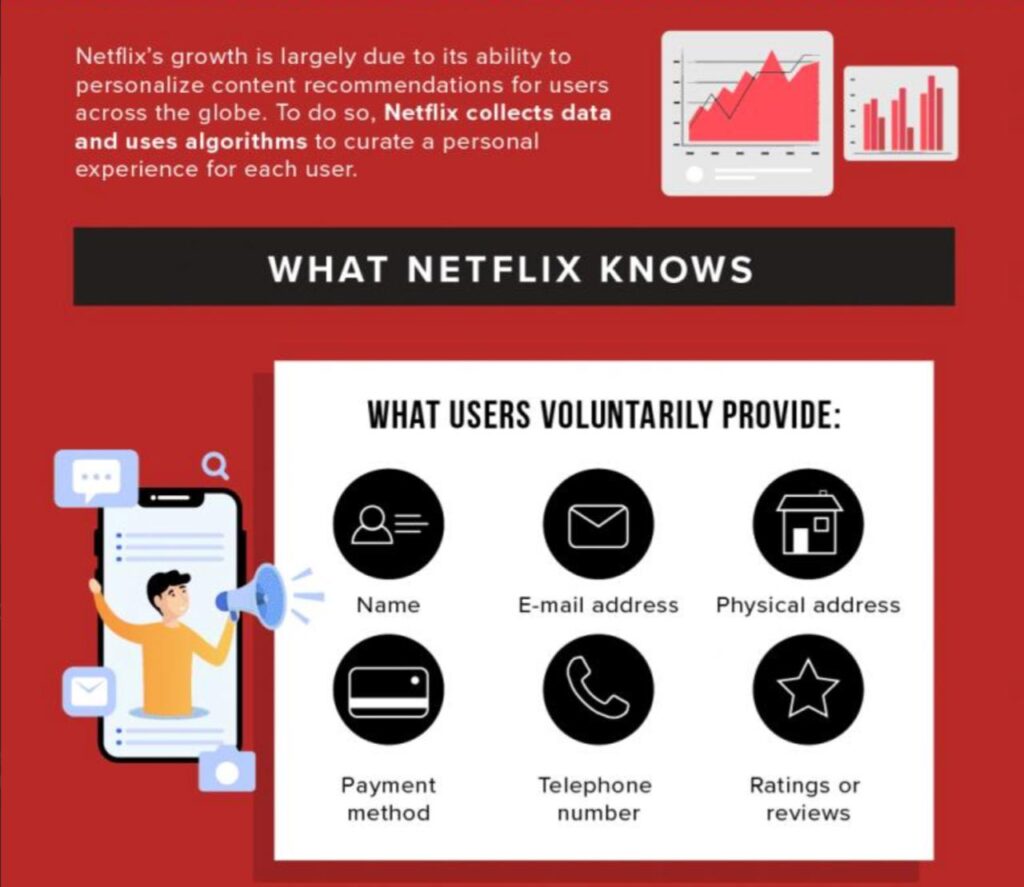
Netflix’s machine learning models analyze billions of data points daily, from what you watch and when you pause, to what you skip after 30 seconds. This data feeds into a deep neural network that personalizes your homepage every single time you log in.
The result? Over 80% of what users watch comes from these personalized recommendations (Business Insider, 2023).
Why does that matter financially? Because more relevant recommendations mean higher watch time, lower churn, and fewer subscription cancellations. If even 5% of users stay subscribed because they keep finding the right shows, that’s hundreds of millions in retained revenue annually.
Netflix engineers often describe their recommendation engine as a “digital concierge”, one that doesn’t just know your taste but anticipates it. In 2016, Netflix shifted from a “five-star rating” system to a “thumbs up/down” system. This simple change, guided by AI insights, improved engagement accuracy by 200%. By focusing on binary feedback, the algorithms learned faster and with less noise — making recommendations even sharper.
FURTHER READING
➤ The Best Large Language Models (LLMs) in 2026
AI in Content Production: Betting on What Works
Every time Netflix greenlights a new show, AI plays a crucial role. Before investing millions in production, Netflix uses predictive analytics to forecast how a show might perform based on audience preferences, regional trends, and even actor popularity. For instance, House of Cards, Netflix’s first big original series, wasn’t chosen just because of Kevin Spacey or David Fincher. Data suggested that viewers who loved political dramas also loved Spacey’s films and Fincher’s directing style. That data-backed decision led to one of Netflix’s earliest global hits.
By leveraging AI-driven forecasting, Netflix minimizes the risk of flops and increases the ROI on new content. A bad investment in a series could cost millions; AI helps them avoid that, one of the biggest contributors to their billion-dollar efficiency gain.
Now, imagine applying this to your business for a product launch or a marketing campaign. Predictive analytics could help you decide which feature, which audience, or which channel deserves your next investment.
What About the Dynamic Streaming Optimization (Buffer-Free Experience)
Have you ever wondered how Netflix streams HD video seamlessly, even on weak internet? That’s thanks to AI-powered encoding optimization. Netflix’s system constantly analyzes your bandwidth, device type, and screen size to deliver the best possible video quality with minimal data usage.
This adaptive bitrate streaming not only improves user satisfaction but also reduces global data transfer costs, saving millions each year in content delivery.
AI models even decide when and where to cache data anticipating viewing demand in different regions. For example, if a new season of Stranger Things is set to drop, AI predicts server load and pre-caches the show across global servers before release. That’s efficiency on a scale few companies can match.
A/B Testing at Scale: AI-Driven Decision Making
Netflix is obsessed with experimentation. Everything, from thumbnail images to homepage layouts is tested. But unlike traditional A/B testing that runs a few static experiments, Netflix uses AI to automate thousands of micro-experiments simultaneously. AI determines not just which design wins, but why it wins by analyzing behavioral patterns across millions of users in real time.
Take for instance; Netflix discovered that simply changing a thumbnail image could increase a title’s click-through rate by up to 30%. Now, machine learning systems automatically choose the best thumbnail for each user, based on past viewing behavior.
This is a reminder that AI doesn’t always mean massive, complex systems. Sometimes, it’s about letting algorithms find the small optimizations that add up to big returns.
Customer Retention & Churn Prediction
One of Netflix’s biggest revenue protectors is its churn prediction model.
Using AI, the platform can identify early signals that a subscriber might cancel, such as decreased viewing frequency, lower engagement with new content, or skipped billing cycles.
Once detected, Netflix proactively recommends engaging content or even customizes marketing offers to re-engage the user. This strategy has kept its churn rate remarkably low compared to competitors like Hulu and Disney+.
In 2022, Netflix tested an AI-driven retention program targeting high-risk churn users with personalized push notifications. The result? A 6% drop in cancellations over three months translating into tens of millions in retained revenue.
Lessons Learned
Netflix’s AI success isn’t about replacing human creativity, it’s about enhancing it. The takeaway for enterprises is clear: AI should be treated as a strategic partner, not just a cost-cutting tool.
Here’s how you can adopt a similar mindset:
- Start with data clarity. Identify the most valuable data your business generates daily sales, behavior, or usage metrics.
- Find efficiency gaps. Look for repetitive or high-cost processes that can benefit from automation.
- Pilot, then scale. Like Netflix, start small, one model, one process and let AI prove its worth before expanding.
Helping companies and organizations design and integrate AI systems tailored to their business goals is what we do at Doshby. Whether for operational efficiency, predictive insights, or customer engagement. The Netflix model shows that small, intelligent integrations compound into massive savings over time.
Final Thoughts
Netflix’s billion-dollar AI success isn’t magic, it’s hard-work, commitment and mastery.
By combining machine learning with deep audience understanding, Netflix has built a self-optimizing ecosystem where every click, pause, and stream fuels smarter decisions, and that’s the real lesson for businesses, that the future isn’t about having AI, It’s about using AI intelligently.
If you’re looking to replicate Netflix-level intelligence in your enterprise systems, now is the time to act.