
In the history of digital media, every major leap in content production has been followed by a seismic shift in how social platforms capture and monetize attention. We saw it with the transition from text to image, and again with the pivot to short-form video. Today, we are at the precipice of a third, more volatile wave: Generative AI (GenAI) video.
Tools like OpenAI’s Sora, Runway, and Luma AI are lowering the barrier to high-fidelity video production to near zero. For creators and marketers, this is a “perfect” evolution, a way to produce cinematic content without the cinematic budget. However, for the social media companies themselves (Meta, TikTok, and YouTube), this influx of AI-generated content represents a classic “innovator’s dilemma.” While GenAI video can drive unprecedented engagement, it simultaneously threatens to break the economic and trust-based foundations upon which these platforms were built.
The Efficiency Paradox: Infinite Content, Finite Attention
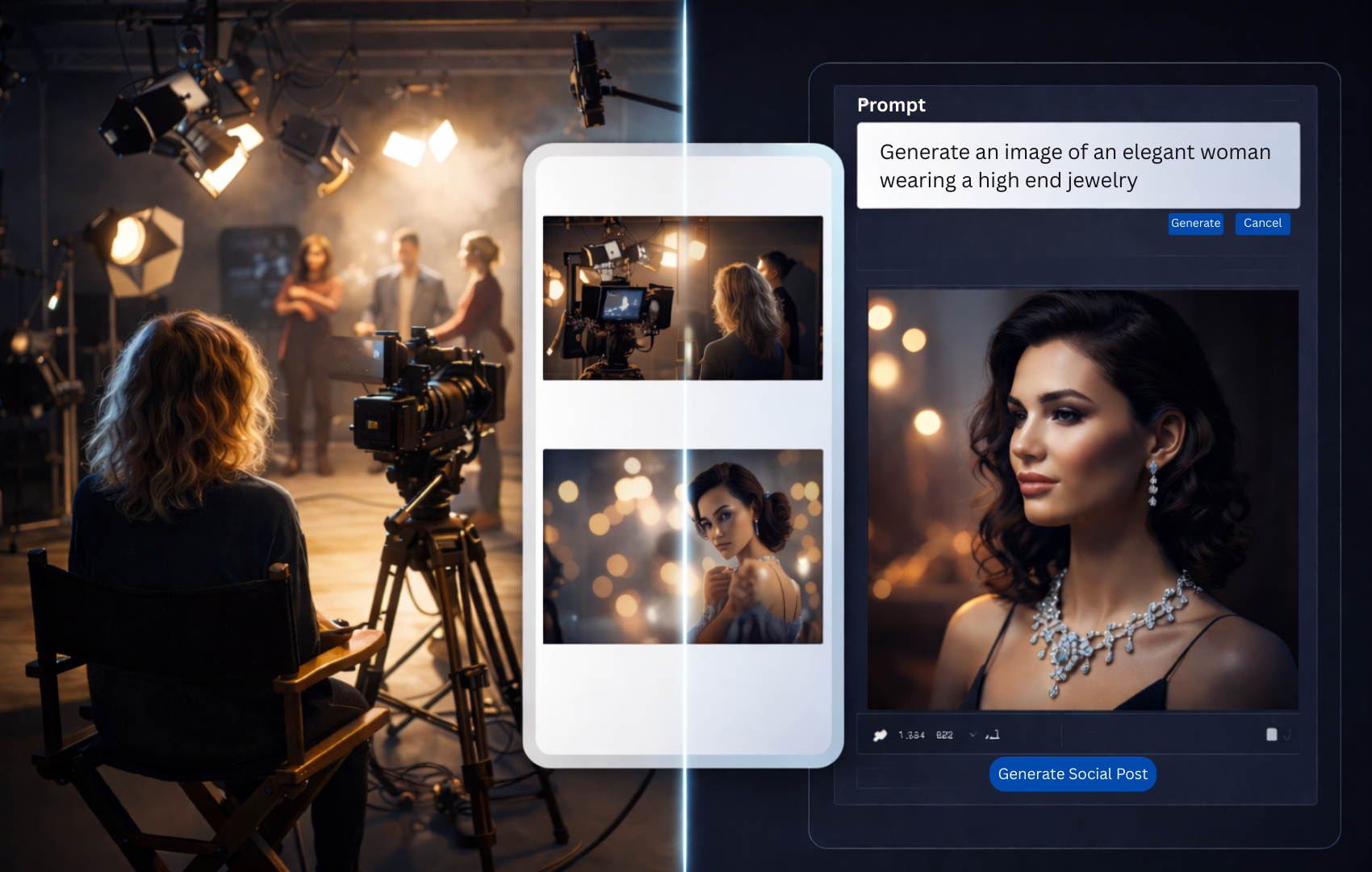
The primary allure of Generative AI video is its ability to democratize high-end production. Historically, creating a 15-second high-quality video required cameras, lighting, editing talent, and significant time. Now, we are entering an era where a single prompt can generate a visual experience that is indistinguishable from professional footage. For social platforms, this “content explosion” is initially beneficial. More content leads to more data, more “scroll-time,” and more ad inventory.
However, we are already seeing the emergence of what industry insiders call “AI slop”; a deluge of low-effort, high-volume synthetic content designed solely to game recommendation algorithms. According to Gartner, the rapid proliferation of synthetic content will force platforms to fundamentally rethink their discovery engines. If the cost of production drops to zero, the volume of content will scale toward infinity. This creates a “signal-to-noise” crisis where human-centric social engagement is buried under a mountain of algorithmically optimized synthetic media.
FURTHER READING
➤ Why Nvidia’s $100 Billion Investment Path with OpenAI Has Stalled
Trust, Safety, and the Escalating Cost of Moderation
The most immediate disruption for social media companies is not economic, but operational. The rise of hyper-realistic GenAI video has made the “Deepfake” problem a central business risk. For platforms like TikTok and Instagram, the cost of content moderation is already a multi-billion-dollar line item. The introduction of synthetic video increases this burden exponentially.
Social media companies are now forced to become the arbiters of reality. We have observed platforms like Meta and YouTube implementing mandatory “AI labels” for synthetic content to preserve user trust. Yet, labeling is only a partial solution. As AI video becomes more sophisticated, the “Trust Gap” between users and platforms widens. If a user cannot distinguish between a real event and a generated one, the “social” aspect of social media—the shared experience of reality—begins to dissolve. This erosion of trust is a long-term threat to the “Brand Safety” that high-spending advertisers demand.
Disruption of the Creator Economy and Ad Models
The economic engine of social media is the creator economy. Currently, platforms act as the middleman between creators (who produce value) and advertisers (who buy attention). Generative AI video disrupts this by decoupling “creativity” from “labor.”
When an influencer can be entirely synthetic as seen with the rise of “Virtual Influencers” the platform’s relationship with the content creator changes. If a platform can generate its own content to keep users engaged, it no longer needs to share ad revenue with a human creator base. This sounds like a win for the platform’s bottom line, but it risks destroying the “social” ecosystem that keeps users coming back. McKinsey & Company notes that the generative AI transition will likely shift value from the content creators to the providers of the foundational models and the platforms that control the data.
Furthermore, we believe the traditional ad-insertion model is at risk. If AI can generate a personalized video ad in real-time based on a user’s specific mood or browsing history, the static “pre-roll” ad becomes obsolete. This requires a complete overhaul of the ad-serving infrastructure, a technical debt that many legacy platforms are currently scrambling to address.
The Shift from “Social” to “Algorithmic Entertainment”
The most profound disruption is the transition of these platforms from social networks to “Generative Entertainment Hubs.” We are moving away from seeing what our friends are doing and toward a “Personalized Feed of Non-Existent Content.”
TikTok has already pioneered the shift toward interest-based feeds over social-based feeds. Generative AI video takes this to the logical extreme. If the algorithm determines that a user wants to see “cyberpunk racing,” it doesn’t need to find a video of that—it can simply generate it on the fly. This turns social media companies into production studios that compete directly with Netflix and Disney, but with a fraction of the overhead. However, this shift removes the “Social” from Social Media, potentially making the platforms more addictive but less community-driven, which increases the risk of regulatory intervention.