

Why AI is More Than Just a Buzzword
A few years ago, “artificial intelligence” sounded like something reserved for Silicon Valley giants like Google, Amazon, maybe Tesla. Fast forward to today, and even mid-sized businesses and startups are reaping the benefits of AI-powered decision-making, automation, and analytics.
Think about it: your marketing team uses predictive tools to forecast leads, your operations team tracks inventory automatically, and your customer service runs 24/7 on AI chatbots. This isn’t the future, it’s already happening.
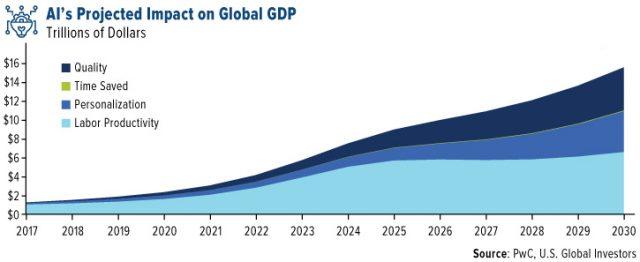
According to a PwC report, AI could contribute up to $15.7 trillion to the global economy by 2030, which marks the biggest commercial opportunity in today’s every growing and changing economy. Yet, the real impact isn’t in big numbers, it’s in the everyday processes that become smarter, faster, and more accurate.
So, what does AI in business processes really look like, and how can your company whether a startup or an enterprise — implement it effectively? Let’s explore.
Understanding AI in Business Processes
At its core, AI in business processes means using algorithms and machine learning models to improve how companies operate. Instead of humans handling repetitive or analytical tasks, AI systems automate, optimize, and even predict outcomes based on data.
For instance, a logistics company might use AI to route deliveries dynamically, avoiding traffic congestion and saving fuel. A fintech startup might automate fraud detection by analyzing transaction patterns in real time.
The beauty of AI lies in its adaptability, from customer support to operations, marketing, and HR, it fits where data flows.
Key Use Cases of AI Across Business Processes
There are so many use cases where AI has positively impacted businesses and their processes in recent times. Looking in to each and every would mean writing a 10,000 word article, so instead, let’s break down some real-world examples where AI makes a measurable difference:
Customer Support Automation
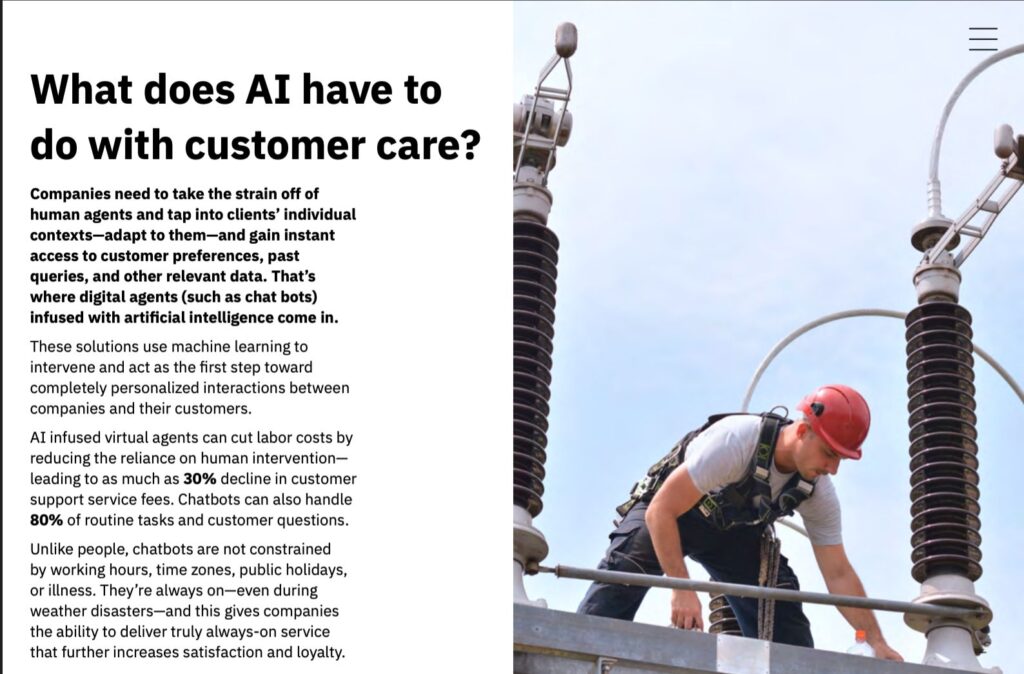
AI chatbots and voice assistants are revolutionizing customer service. Think of how Zendesk’s AI bots handle initial queries or how Amazon’s Alexa for Business automates internal communications.
These bots don’t just respond faster; they learn. Over time, they adapt to frequently asked questions and provide contextual answers, freeing human agents to handle complex cases.
A recent IBM study found that AI-driven chatbots reduce support costs by up to 30% while increasing customer satisfaction scores.
Sales and Marketing Intelligence
Marketers no longer rely solely on gut feelings. AI tools like HubSpot’s predictive lead scoring and Salesforce Einstein analyze massive data points to identify the hottest prospects.
Imagine running a campaign that automatically targets customers most likely to convert that’s AI doing the heavy lifting. According to Gartner, companies that use AI for sales forecasting outperform competitors by 10–15% in revenue growth.
Operations and Workflow Automation
Manual workflows slow down progress. AI-driven automation like UiPath’s robotic process automation (RPA) helps businesses eliminate routine data entry, report generation, or compliance tracking.
For example, a mid-sized logistics company can automate delivery tracking and billing reconciliation, cutting processing times by 50%. In manufacturing, General Electric uses predictive maintenance models to identify machine issues before breakdowns occur saving millions annually.
Financial and Risk Management
AI in finance is about precision. From AI-powered fraud detection systems to automated credit scoring, financial institutions are improving decision-making with better accuracy.
Take PayPal, which uses machine learning to analyze transaction anomalies in real time. This helps prevent billions in fraudulent activity annually. For businesses, implementing similar systems via AI APIs can provide real-time insights into expenses, profits, and anomalies.
Human Resources and Talent Management
AI doesn’t replace HR it empowers it. Tools like HireVue analyze video interviews using sentiment analysis, while platforms like LinkedIn Recruiter AI suggest candidates with the best skill match.
This reduces hiring bias, shortens recruitment cycles, and enhances candidate experiences, crucial for scaling companies.
Benefits of AI Integration in Business Processes
Now that we’ve seen how businesses use AI, let’s break down the tangible benefits that come with it.
Better Decision-Making
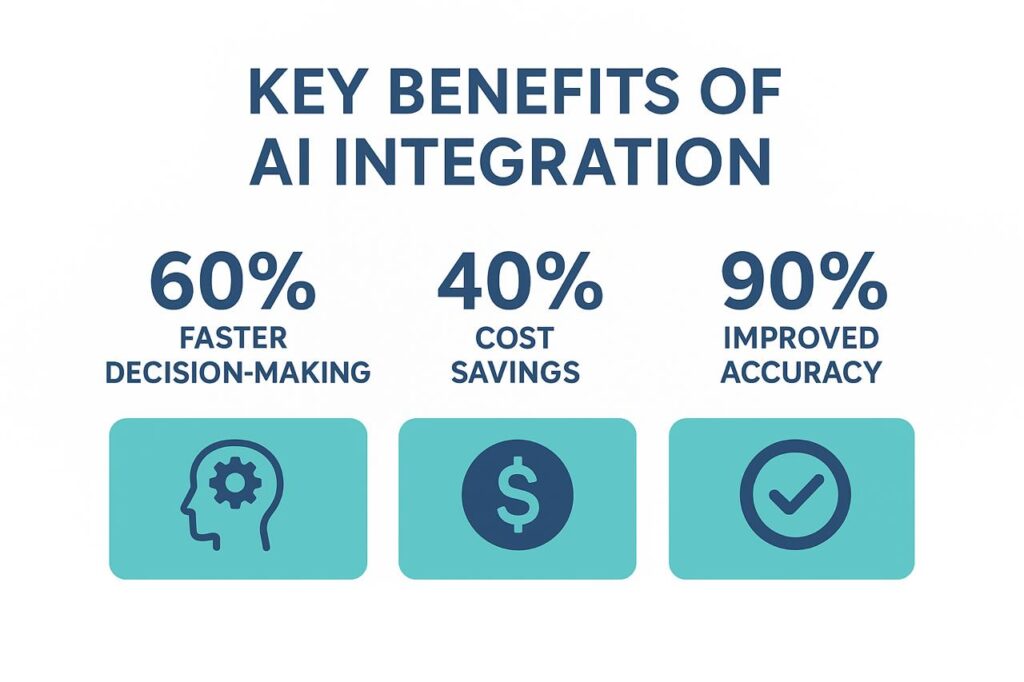
AI systems process data far faster than humans ever could. They help leaders make evidence-backed decisions instead of assumptions. A Deloitte study revealed that 62% of companies use AI insights to guide strategic decisions from pricing models to supply chain adjustments.
At Doshby, we help companies integrate these decision systems into dashboards so stakeholders get predictive insights, not just reports.
Cost Efficiency and Time Savings
Automating repetitive tasks like data entry, report creation, or inventory tracking reduces operational costs significantly.
According to McKinsey, businesses can save up to 40% of total working hours by automating routine processes.
Imagine reallocating that time to innovation and strategy. That’s the real power of AI.
Improved Accuracy and Risk Reduction
AI thrives on precision. From detecting anomalies in transactions to predicting equipment failures, it reduces human errors and risk exposure.
Financial institutions, for example, now use AI-driven algorithms to spot subtle fraud patterns invisible to human analysts.
Scalability and Consistency
As your business grows, AI systems scale effortlessly. Whether it’s handling 1,000 or 1,000,000 customer queries, AI maintains quality and speed without additional manpower.
This consistency is a competitive advantage especially for startups scaling quickly.
FURTHER READING
➤ AI Integration for Enterprise: What You Need to Know
How to Implement AI in Your Business (Step-by-Step)
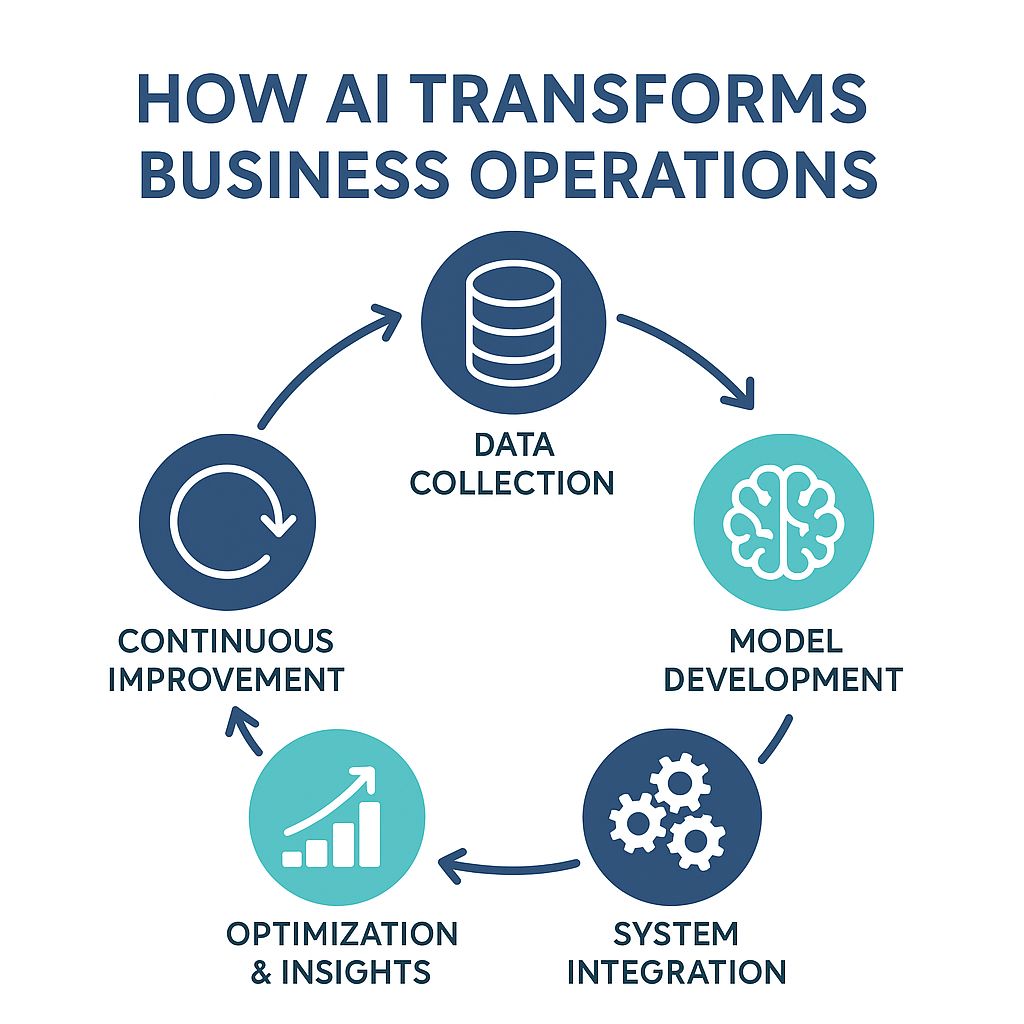
AI implementation isn’t about installing a tool it’s a journey. Here’s how most successful companies approach it.
1: Identify High-Impact Areas
Start small. Look for processes where automation or prediction can save the most time or money such as customer service or data analysis.
2: Gather and Prepare Data
AI is only as good as the data it learns from. Clean, structured, and labeled data ensures your model makes reliable predictions.
3: Choose the Right AI Partner
This is where partnering with experts like Doshby makes the difference. We design AI-driven systems that align with your goals — not just implement generic models.
4: Pilot and Optimize
Test the AI in one department before scaling. Gather feedback, refine the algorithms, and ensure smooth system integration.
5: Scale and Monitor
Once proven effective, scale gradually across business units. Use analytics dashboards to monitor performance and continuously improve results.
Common Challenges in AI Implementation
Even the best strategies face challenges. The most common include:
- Data quality issues (incomplete or biased data leads to inaccurate models).
- Integration difficulties with legacy systems.
- Lack of technical expertise in AI deployment.
That’s why having a partner experienced in AI integration, like Doshby, is crucial. We help organizations overcome these hurdles and turn complexity into opportunity.
Real-World Example: AI Transformation in Action
Let’s look at a real case: Netflix.
Netflix leverages AI across its business — from recommending shows to optimizing bandwidth during streaming. The recommendation algorithm alone saves the company over $1 billion annually, according to Factspan.
How? Netflix uses an AI-based recommendation system that is responsible for reducing the customer attrition rate, by adopting a personalized recommendation approach rather than a Popular recommendation. This means while other platforms are liable to preview movies/shows based on their popularity, Netflix’s AI recommendation engine filters the movies and series based on each customer’s past viewing history, search patterns, watch behavior, preference, and what they love.
Now imagine applying that same AI-driven personalization to your business, whether in marketing campaigns or customer retention strategies.
That’s the essence of AI in business processes: data becomes insight, and insight becomes action.
The Future of AI in Business Processes
As generative AI evolves, it will move beyond automation into decision augmentation where systems act as intelligent collaborators rather than mere tools.
For example, AI co-pilots can summarize project data, generate product ideas, or simulate market outcomes. The line between human strategy and machine insight will blur and businesses that adapt early will lead the pack.